
Chris Roper’s article, “Does vitriol put you in a bad mood?” in the Financial Mail of 4 June 2026, deserves an award for its snotty hypocrisy. Ostensibly about declining news readership, Roper, predictably, descends into an attack on people whose world view he doesn’t agree with.
As is common these days, the intractable Palestinian dilemma is used as a smokescreen for censorship. In Roper’s Orwellian utopia, speech should only be free if it operates within the narrow parameters of his biased world view. If your opinions hurt the (imagined) feelings of the disenfranchised masses, which Roper has decided he as a middle-aged white man represents, then you must surely be banished from mainstream news platforms. Only he and his fellow media insiders, as the sole arbiters of truth, should be permitted to address the great unwashed. Robust debate be damned.
It’s a very simple equation
Journalists and professional commentators who devote 90% of their energy to far-flung conflicts and identity politics, while mostly ignoring widespread human rights abuses and deprivations closer to home, are not only criminally biased, but in many instances compromised by close financial relationships with broadcasters, NGOs, government bodies, and private sector companies.
It’s childishly easy to point out an obvious right-wing shill as Roper did in his FM missive. But it takes honesty and integrity to cast the same critical eye on “mainstream” journalists like Redi Tlhabi and Max du Preez who have both built lucrative cottage industries in cliched social justice tropes and attacking soft targets like AfriForum.
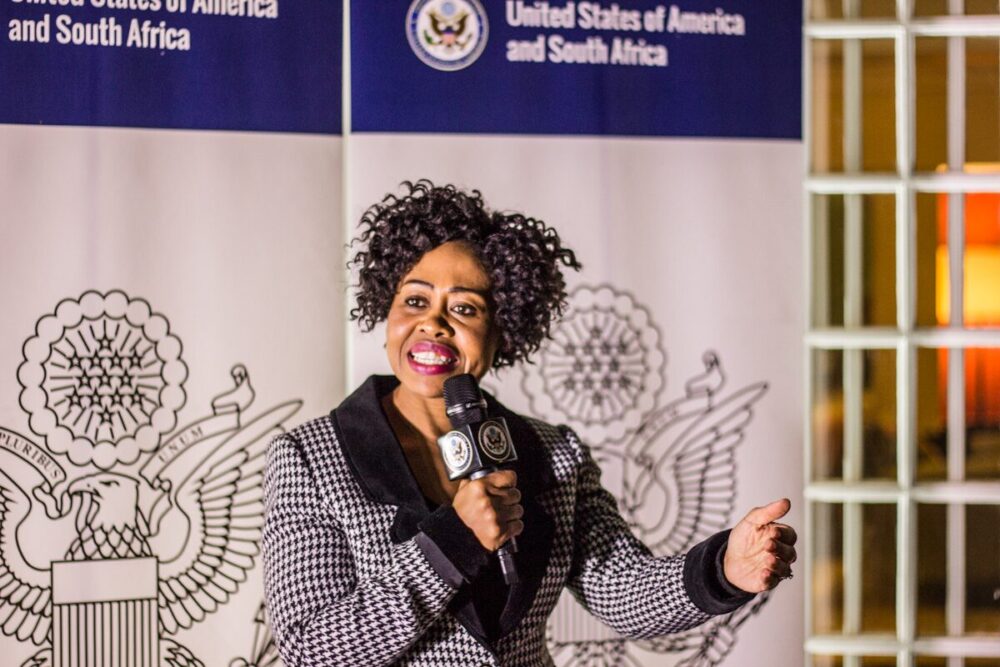
In Tlhabi’s case, a simple analysis of her X account reveals a deluge of rants about US identity politics and Middle-eastern conflicts, obviously to elicit engagement from her ignorant, entitled, and easily manipulated social media followers.
Less than 1% of her commentary focuses on South Africa’s 60-a-day murder rate, gross human rights abuses due to BEE corruption, women executed by the Iranian regime, one million Uighurs in concentration camps, UAE financing of atrocities in Darfur, etc. Except for her callous disregard for the wellbeing of South Africans, it is quite strange for a self-proclaimed international affairs expert to completely ignore 90% of the world?
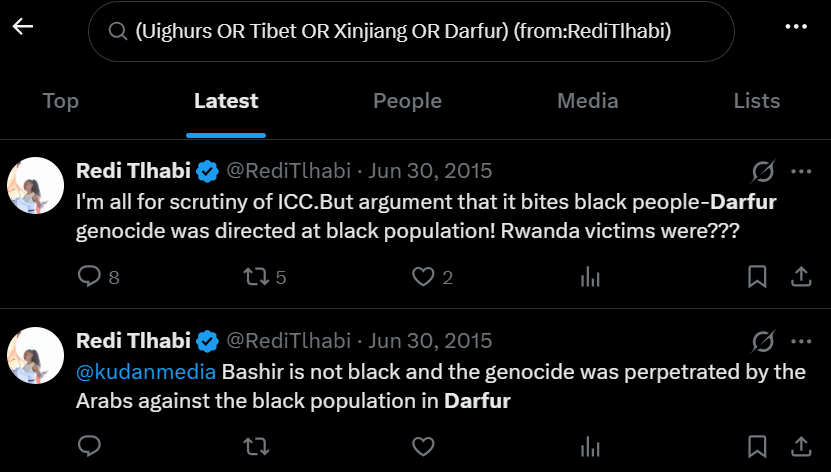
Here’s another, more personal, example of Tlhabi’s breathtaking hypocrisy. Her current employer, Al Jazeera, is funded by an oppressive regime that violates women’s rights and would have imprisoned her friend Eusebius McKaiser if he was alive today. Not a peep out of her loquacious mouth.
Under Article 285 of the Qatari Penal Code (Law No. 11), consensual same-sex relations between adults can result in up to 7 years of imprisonment.
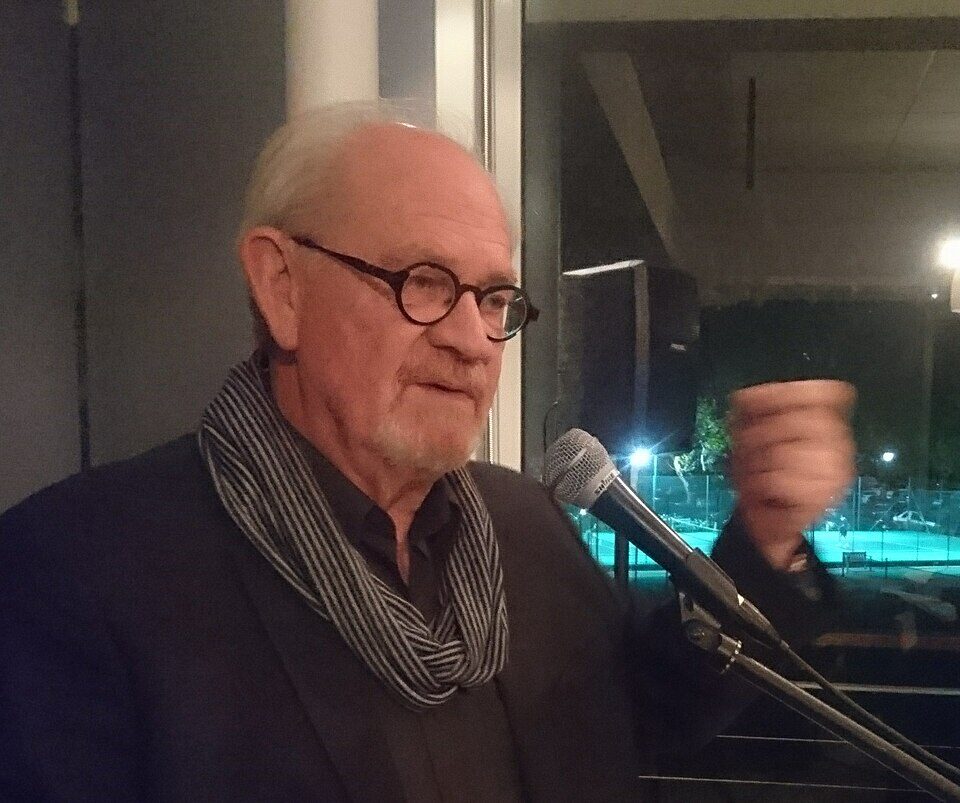
Max du Preez is on record denying any knowledge of Koos Bekker’s apartheid-era monopoly pay-tv licence. He is also oblivious to the fact that Bekker sits on the board of Tencent with CCP members who signed agreements with the Chinese regime to surveil, censor, and help persecute users of Tencent’s platforms, especially in Xinjiang and Tibet. His feigned ignorance makes sense when you realise he has longstanding professional ties to various Naspers subsidiaries. In his pseudo-progressive echo chamber the only bad Afrikaners are AfriForum Afrikaners.
Ironically for such a vocal supporter of oppressed people, Du Preez has managed to remove himself as far away from said people as possible in South Africa. It’s there, on the lilywhite slopes of his Simon’s Town neighbourhood, that he often bewails the dire state of his black-run home town in the Free State.
Always follow the money
It is worth pointing out that media operators like Roper, Tlhabi and Du Preez don’t really focus on actual journalism anymore, if they ever did.
After Roper helped apartheid-legacy company, Naspers, flood South Africa’s online landscape with 24.com clickbait and ran Mail & Guardian into the ground, he somehow segued into a comfy NGO role as an African media technology expert. Ten years later, he is still perched there, a modestly-educated white guy lecturing more than a billion black Africans on how they should approach data in their countries. And of course, there’s his side-gig writing snide commentary for the Financial Mail, a leftover from his networking days. His obnoxious views are so childishly biased that comments are often disabled.
[To be fair, Roper’s takedowns of that slimy toad, Iqbal Survé and his dodgy companies, deserve credit, even if that’s some of the lowest hanging fruit on the South African corruption tree.]
Tlhabi, never a real journalist, leveraged her talking head status into a very lucrative career as presenter and moderator for government broadcasters like the BBC and Al Jazeera, as well as various NGOs. The playbook: never criticize the hosts, slurp up those publicly-funded pay checks, and pretend that one-dimensional takes on the latest global outrage – which you copy-pasted from elsewhere – are your own insights.
Du Preez’s image as a courageous journalist during apartheid has been severely tarnished by his sanctimonious obsession with ‘bad’ Afrikaners and the Palestinians’ plight, to the exclusion of far more salient issues in South African society. These days you’ll mostly find Max spouting pompous banalities at Naspers-funded talk fests or blocking people on X for daring to mention those dirty Tibetans and Uighurs.
Who watches the watchers?
There’s an obvious case to be made for quality journalism that doesn’t promote populism, act as a front for vested interests, or spread disinformation. But networking yourself into a media career doesn’t automatically make you a good or principled journalist.
The first essential of good journalism is that the news must be fair, accurate, and unbiased.
Walter Cronkite
For most of the twentieth century, Western audiences were fed the fantasy that all mainstream journalists were professionals of high integrity, even if they wrote for publications with widely differing agendas. That façade was first cracked by the advent of the internet and then blown away by the ubiquitous adoption of social media.
Readers can now cross-reference breaking stories across thousands of independent outlets and specialised organisations like the Pew Research Center or global reporting networks.
The web provides direct access to live streams, government dockets, and primary documents, allowing audiences to bypass mainstream gatekeepers and read source materials themselves.
Yes, the democratisation of news and information has been a double-edged sword. It’s easier than ever for so-called independent commentators to weaponise and monetise disinformation. People’s naturally inclination to consume news in the most superficial (read lazy) way possible, has made these slimy operators’ jobs so much easier. Whip up outrage and sell some MAGA crypto.
But shouldn’t the same, if not higher, level of scrutiny apply to mainstream journalists? It would be naive to think that many of them do not pander to the lowest common denominator in the fierce competition for attention.
Unfortunately, a media oversight body like The Press Council cynically uses a narrow interpretation of locus standi to protect its members from valid complaints. You cannot lodge a complaint on behalf of the public good, no matter how big the lie published.
So it’s up to the court of public opinion to hold two-faced twerps like Roper and their paymasters to account. The better ones will own up and mend their ways; the irredeemable ones will eventually crack under the pressure. Charlie Rose was a highly respected talk show host for decades, until 35 women accused him of abusive behaviour and sexual harassment. Verashni Pillay, a buddy of Roper’s, is still flapping about in ignominy after her Huffington Post debacle. After his Vrye Weekblad soapbox folded, Max du Preez increasingly looks and acts like a bergie on his last legs.
In the end, what Roper is really crying about is that a modestly-skilled hack like himself can’t play gatekeeper anymore simply by networking himself into a media role of influence. Good riddance.




Roper’s whole career has been funded by apartheid-legacy capital. Mweb, 24.com, Media24, Mail & Guardian are/were all wholly or partly owned by Naspers, a company that has done serious damage to media diversity in South Africa.